The core of the GMSbiotech technology platform is a very low cost and high throughput method to fabricate microarrays and other similar solid-state devices for the analysis of many gene sites in parallel.
GMSbiotech microarrays are fabricated by non-covalent attachment of DNA fragments to specific sites on a surface to form an array of sites ("the microarray") that can independently engage in DNA hybridization analysis with a complex solution state DNA mixture of interest: each DNA site on the micro array performing a unique DNA hybridization test. The spontaneous assembly of an orderly DNA monolayer on the microarray surface and the resulting novel duplex form that results upon binding to it, is the basis for the GMS's IP position.
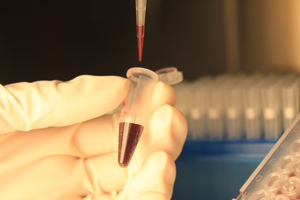
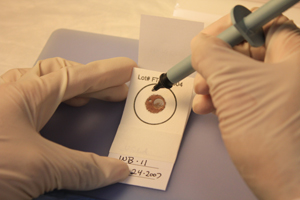
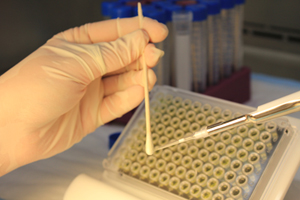
GMSbiotech has also found a way to completely bypass DNA purification in its genotyping products: enabling routine genotyping from a microliter (about 1/50th of a drop) of raw blood; or enabling genotyping from about 1/10th of the dried blood in a single 2mm punch-out from a neonatal filter paper card; or enabling genotyping from 1/50th of the rehydrated sample derived from an ordinary cheek swab. It makes sample collection for genotyping as simple and inexpensive as possible, in a way that fits naturally into existing, large-scale public health sample collection schemes. In terms of workflow, it cuts in half, the time and the number of steps required to perform such genotyping. And finally, in terms of cost, it eliminates the cost of DNA purification from genotyping, thus reducing the cost per test by about 50%. GMS holds several US and foreign patents on this technology.
The protein microarrays use the same platform that is used in our DNA microarrays. The protein is non-covalently bound on the surface in an oligo-dT matrix that is adsorbed onto an epoxy or amino silane layer. The proteins have been found to maintain their native configuration as demonstrated in sHLA protein-based antibody screening assay for monitoring organ transplantation.
GMS has obtained several patents in the protein microarray technology as shown in the chart elsewhere.
The DNA microarray and sample amplification/purification technologies have been licensed non-exclusively for a variety of fields-of-use and the protein microarray has been licensed exclusively for HLA based protein diagnostic applications but are available for other fields-of-use, Anyone interested in licensing one or more of the above technologies, please contact Dr. Krishna Jayaraman.